Bioclimatic Pergola Guide: Rotating Louvres, Sizes and Specification
A bioclimatic pergola is an aluminium terrace structure whose roof is built from rotating louvres. By turning the blades between 0 and roughly 135 degrees you decide how much sun, shade and airflow reaches the space below; fully closed, the roof sheds rain like a solid canopy. Because the whole frame is extruded aluminium, a bioclimatic pergola stays light, corrosion free and practically maintenance free — which is why it has become the default choice for restaurants, hotels and premium home terraces.
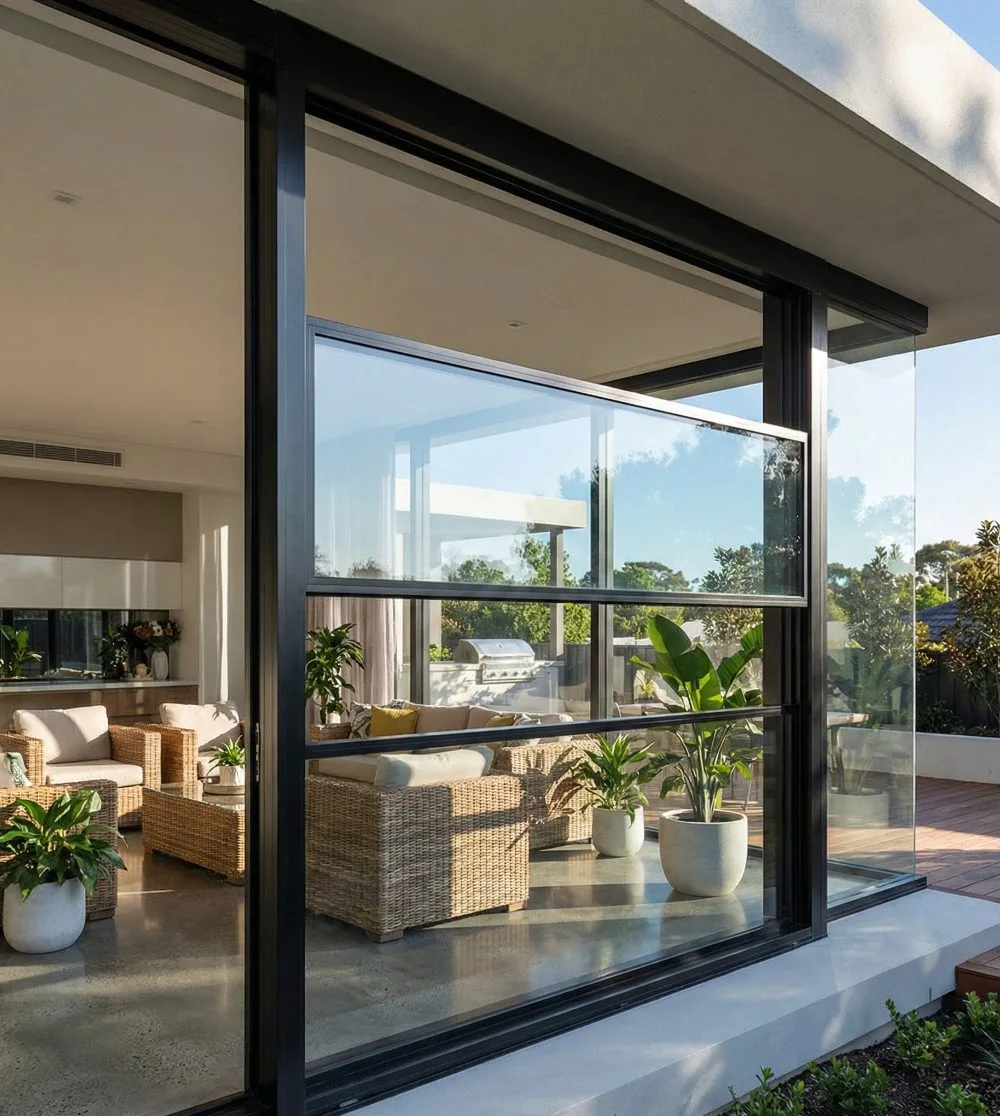
How a bioclimatic pergola works
The heart of the system is the louvre blade: an extruded aluminium profile with an internal water channel and EPDM gaskets. When the blades close, rainwater flows into a hidden gutter in the perimeter beam and drains through the legs, so no visible downpipes clutter the design. A quiet motor rotates the blades; control is by radio remote, wall switch or smartphone app, and optional rain and wind sensors close the roof automatically when the weather turns. Because every part of a bioclimatic pergola is aluminium extrusion, the structure can be powder coated in any RAL colour or a wood-effect finish to match the building facade.
Technical specifications to check
- Frame and louvres in EN AW-6063 T6 aluminium extrusion with electrostatic powder coating
- Single module width up to about 4.0 m and projection up to 6-7 m; modules join side by side for unlimited length
- Snow load in the 100-150 kg per square metre range and wind resistance verified by a project-based static check
- Integrated perimeter gutter with water drained inside the columns
- Accessories: LED strip lighting, radiant heaters, side closures with guillotine glass or zip screens
Where a bioclimatic pergola is used
Restaurants and cafes
A bioclimatic pergola turns an outdoor seating zone into year-round covered capacity: open in summer for full ventilation, closed and heated in winter. In many regions the louvre roof is treated more favourably than a fixed roof in permit terms — verify locally.
Hotels and rooftops
Rooftop bars and pool decks use motorised louvres to manage sun during the day and open the sky at night, with lighting and heating built into the same aluminium frame.
Homes
Over a terrace, garden lounge or outdoor kitchen, the pergola extends the usable season by months while protecting furniture from rain and UV.
Bioclimatic pergola or fixed glass canopy?
If the goal is a permanently transparent, weather-tight roof, a fixed glass canopy or glass roof is the better fit. If the goal is ventilation, shade control and rain protection in one adjustable structure, the bioclimatic pergola wins. Many projects combine both: louvres over the seating area, a glass canopy over the walkway.
Specification checklist before you request a price
Prepare the width and projection, snow and wind zone, mounting type (freestanding or wall mounted), number of modules, side closures such as guillotine glass, RAL colour and electrical accessories. With these values a supplier can quote quickly and accurately.
Gtekal extrudes the aluminium profiles behind these systems and delivers pergola and glass projects under the MaxiVeranda brand — see the pergola and glass systems page or request a quote.